MIDI stands for Musical Instrument Digital Interface. It is a way for electronic instruments and computers to send messages about notes, timing, and controls instead of actual sound waves. A musician can press a key on a keyboard and that action turns into data that another device reads and plays. This setup keeps file sizes small because no audio is stored, only instructions like which note sounded and how hard it was pressed.
Early on, different brands of synthesizers could not talk to each other. Each company used its own system. That changed when engineers from several manufacturers met and agreed on a common language. By the middle of the 1980s the first MIDI specification was in use. Keyboards from one maker could now trigger sounds on another. Song files could move between machines without losing the basic performance data.
Key steps in the spread of MIDI
The original standard grew over time. A later addition called General MIDI set a list of 128 instrument sounds so that a file would play roughly the same on any compatible device. That helped hobbyists share sequences without worrying about completely different timbres. Later updates added more channels, finer control over expression, and ways to handle larger numbers of notes at once. None of these changes replaced the core idea; they simply gave more room for detail.
Musicians adopted the format quickly because it solved real problems. A drummer could program a beat once and reuse it in several songs. A guitarist could record a simple melody line and then edit single notes without rerecording the whole take. These practical gains kept the protocol alive even as recording moved from tape to hard drives.
Everyday uses in recording sessions
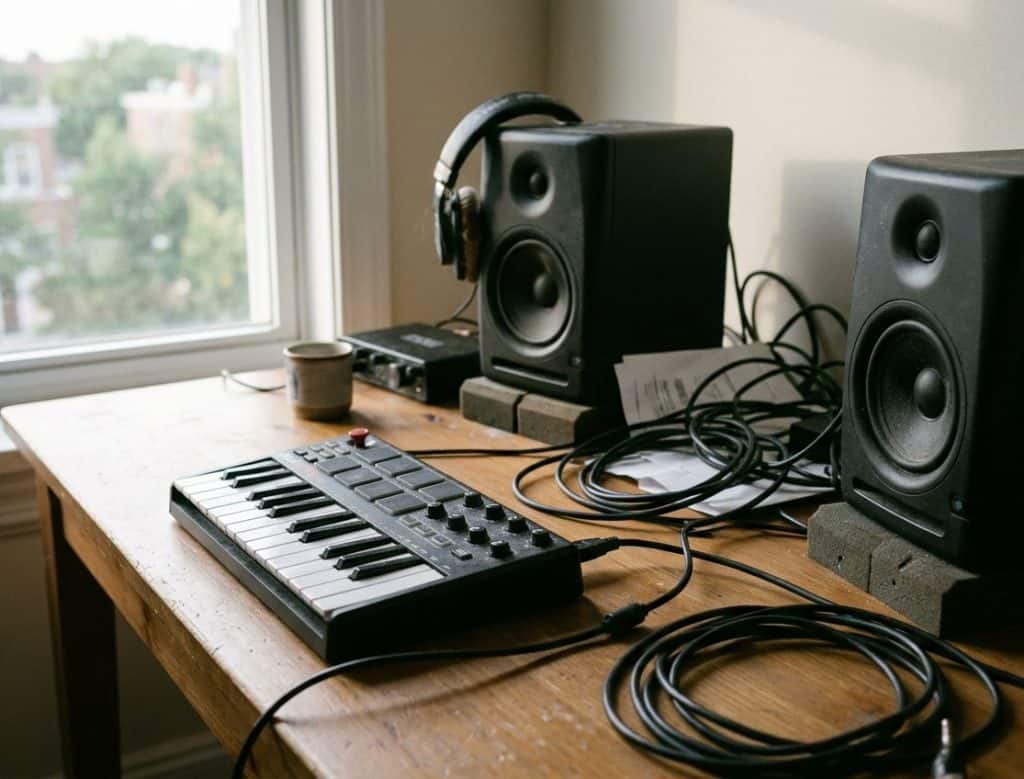
In a home studio a MIDI controller often serves as the main input device. The player records the timing and velocity of each note. Later the same data can trigger different sounds, change the tempo, or correct small timing errors. Because the data stays separate from the audio, the producer can swap a piano patch for a string section without touching the performance itself.
Live performers use the same principle. A keyboard player can carry one lightweight controller and call up different sounds from a rack or laptop. Foot pedals send program changes or volume messages. When a song needs a sudden shift in texture, one button press can load a new set of patches across several devices at the same time.
Some bands still combine MIDI with traditional audio. A bass player might run a direct signal while also sending note data to a synth module that doubles the line an octave higher. The result stays tight because both signals start from the same physical performance.
Current software that handles MIDI
Most digital audio workstations read and write MIDI files as a matter of course. The files act as a common exchange format between programs. A sequence started in one application can move to another for further editing or mixing. This flexibility matters when collaborators use different tools.
Inside these programs the MIDI data appears on a grid or piano roll. Each row stands for a pitch and each column for a moment in time. The user can drag notes, change lengths, or adjust velocity values one by one. Many programs also let the same data control virtual instruments that load on demand, so the computer itself becomes the sound source.
A short list of common tasks shows how the workflow stays consistent across programs:
– Recording a performance from a controller
– Editing individual notes after the fact
– Sending program changes to external hardware
– Exporting the finished sequence for use elsewhere
People still rely on MIDI because the basic messages remain useful decades after the first standard appeared. The format does not produce the final sound, yet it gives clear instructions that many different machines and programs can follow. That practical reliability explains why the protocol continues to appear in new hardware and software even as audio quality and computing power keep increasing.